Digital employees,
not chatbots.
Build your Clone team.
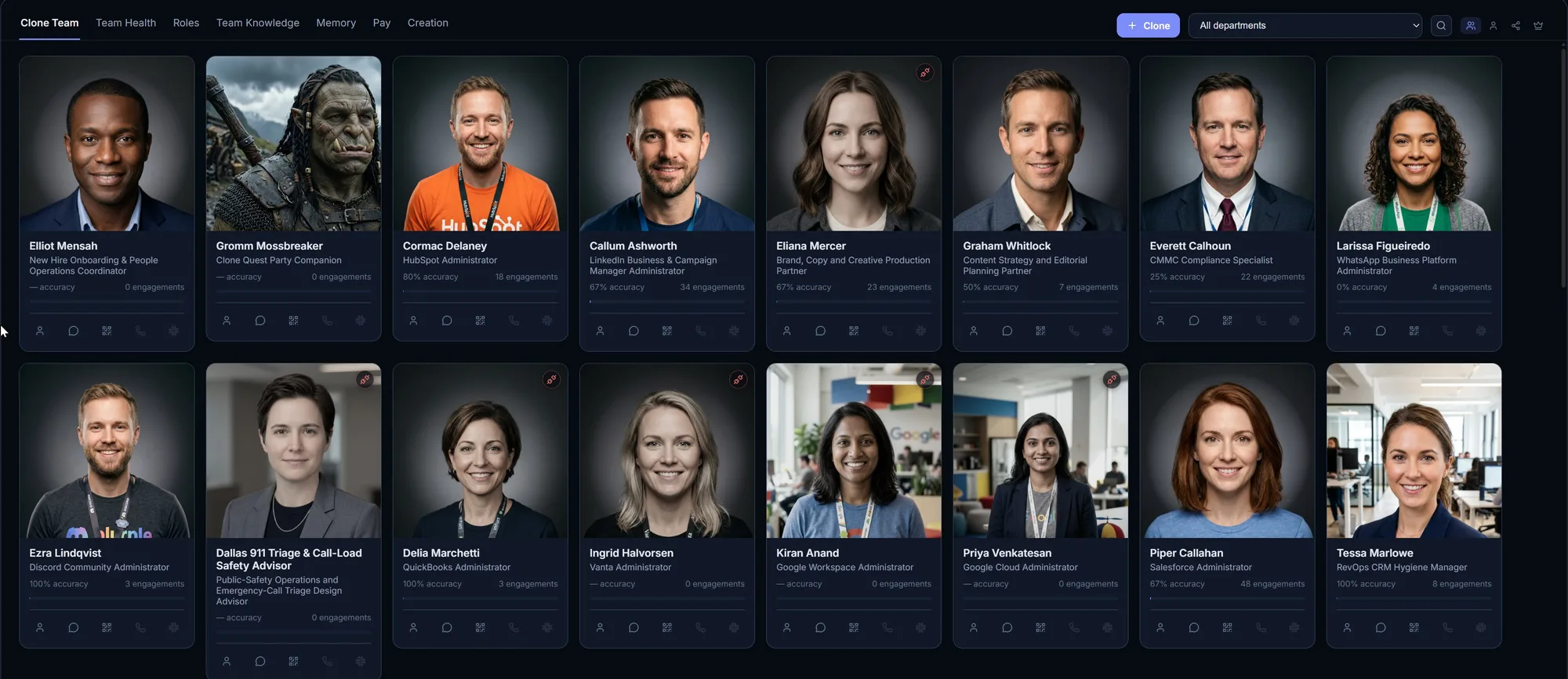
Clones join your organization like employees. Each one takes a real role with areas of responsibility, works your channels — email, phone, SMS, Slack, Teams — and reports the KPIs, engagement, and value it creates. You stay in charge; they do the work.
One Clone team. An app for every job.
Messaging, CRM, social, video, hiring, code and support: a family of apps built for teams where clones work beside people. Your clones do the work in each one. You see it, approve it and stay in charge.
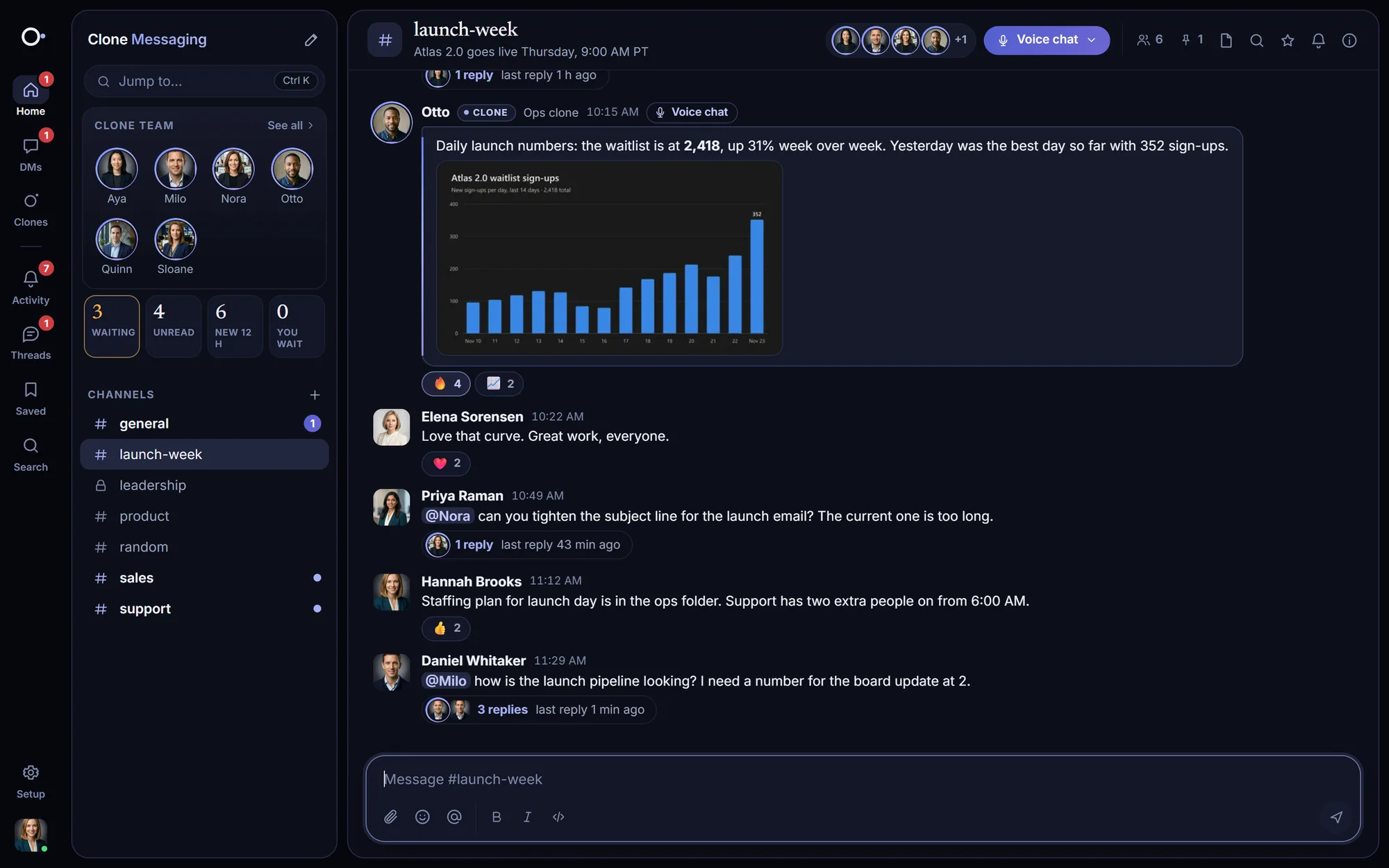
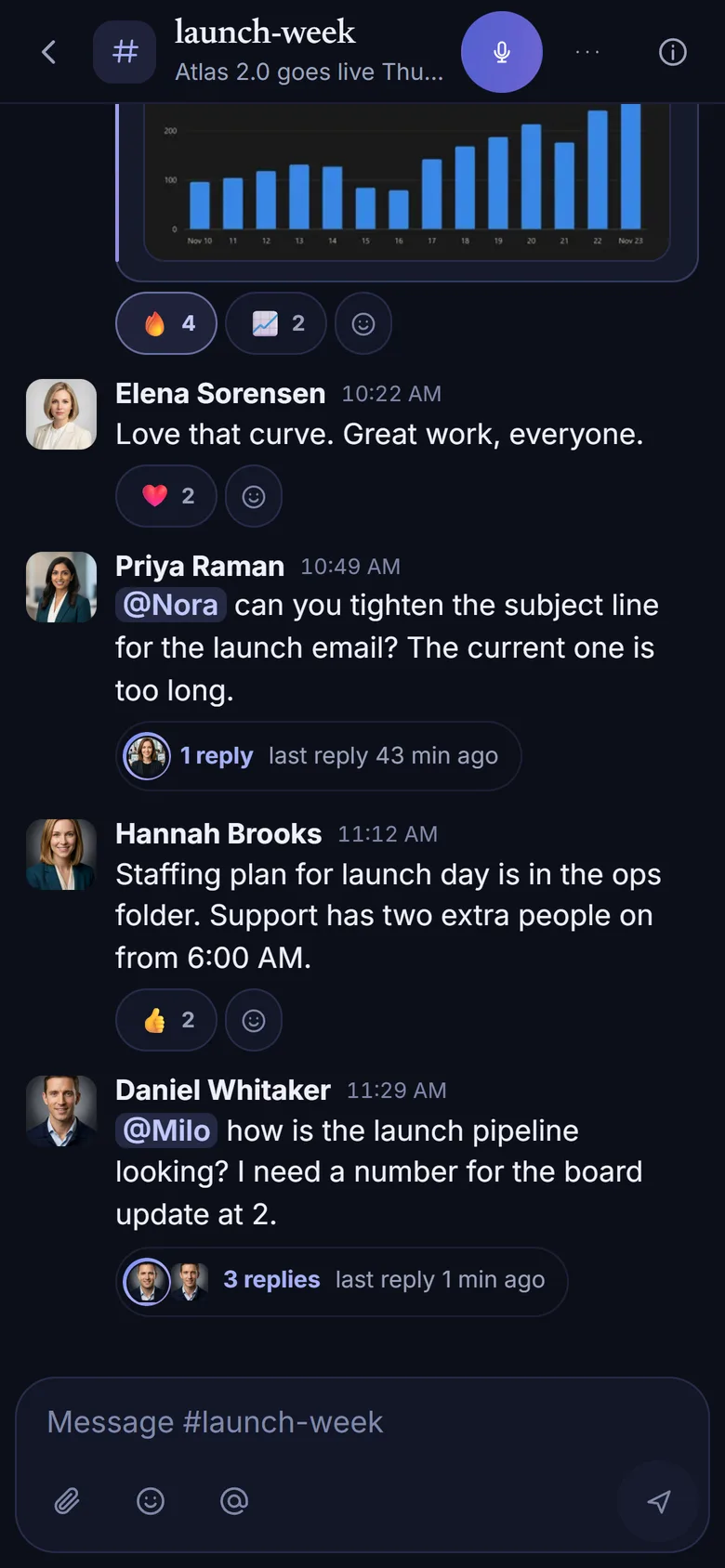
Team messaging where your clones are teammates.
Channels, DMs, threads and voice. @mention a clone like anyone else on the team and it answers in the thread, with the work attached.
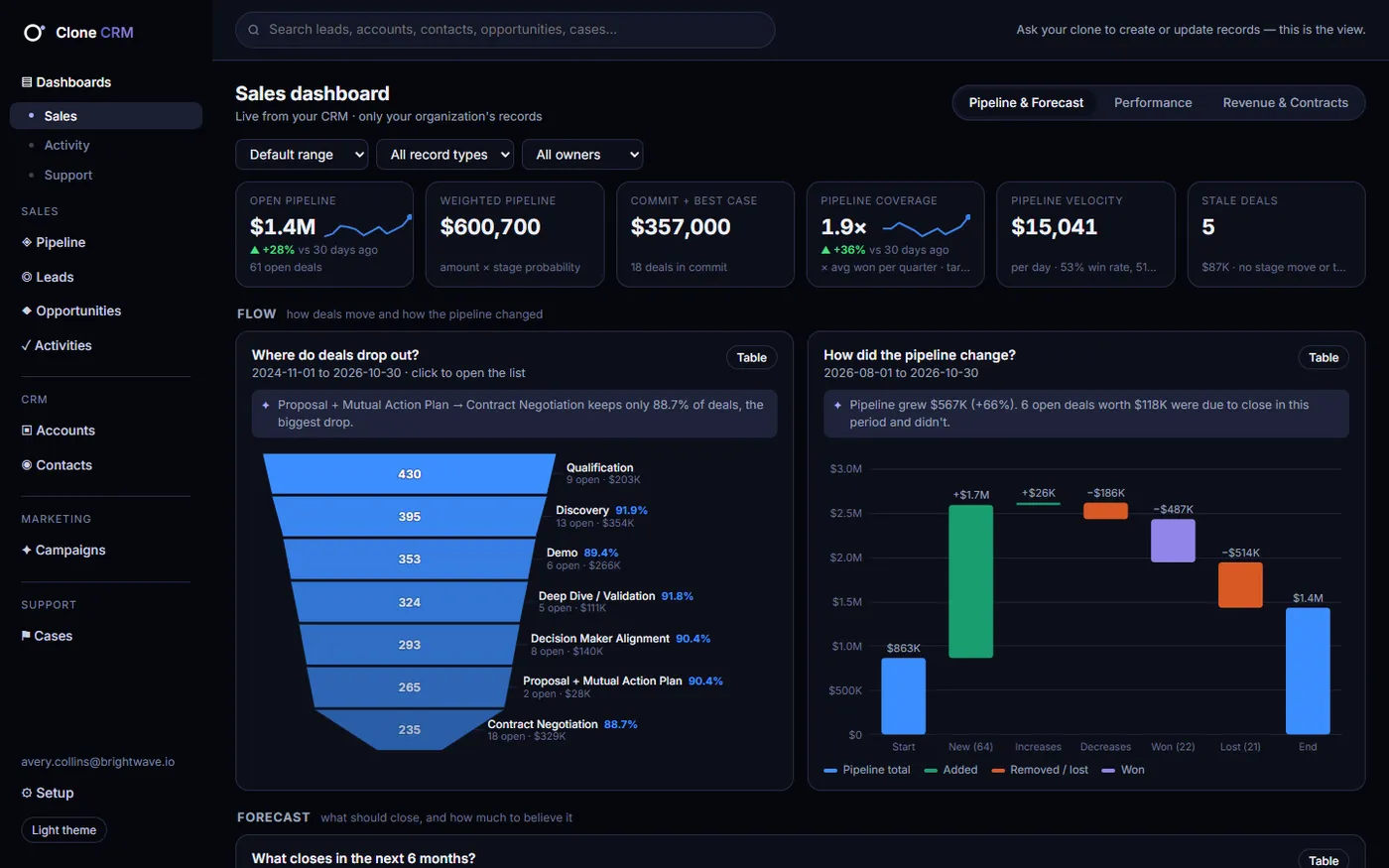
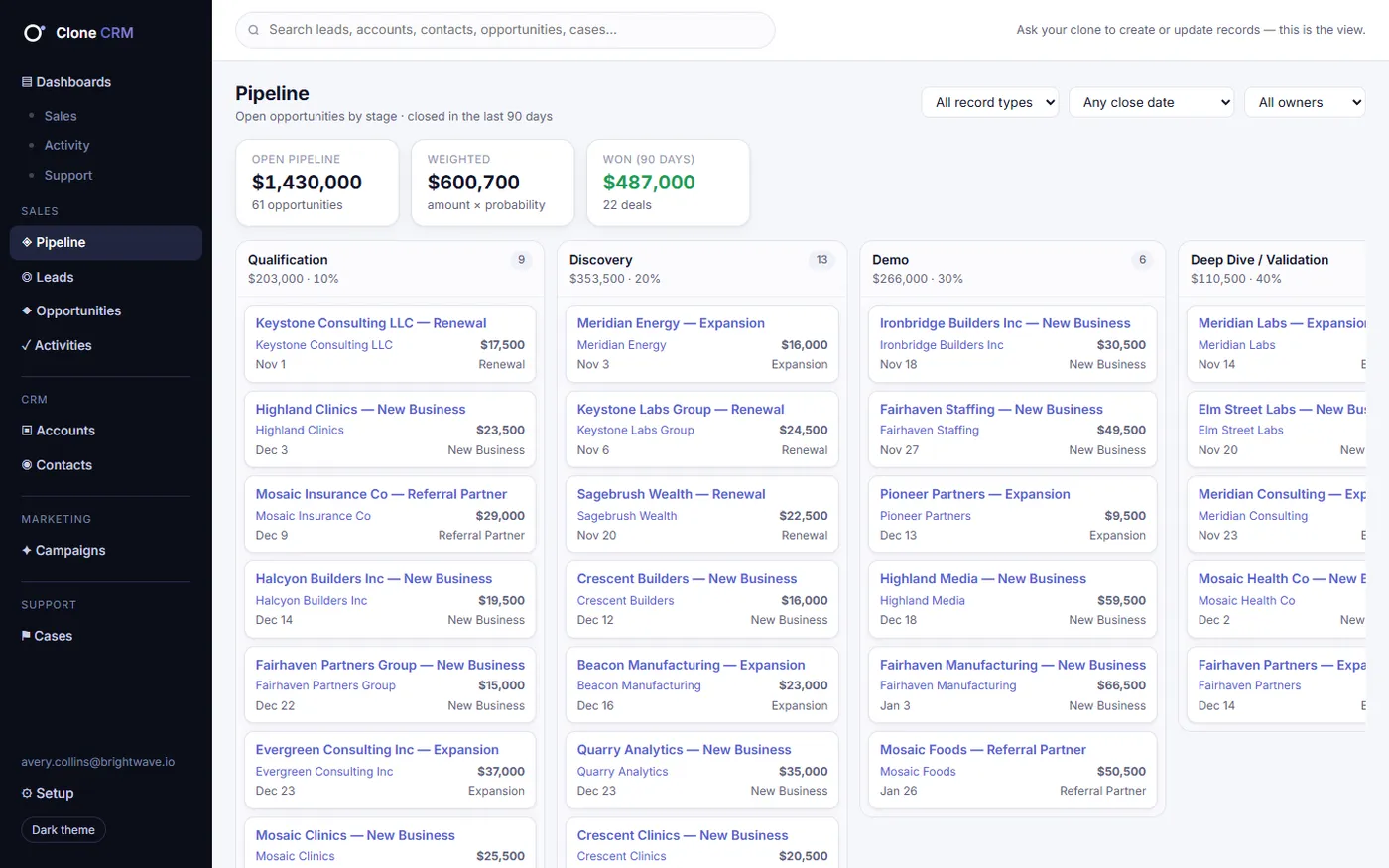
The first CRM run by Clones.
Tell your clone about the call. It logs the activity, updates the deal and builds the report. You get the pipeline, the dashboards and the cases, without the data entry.
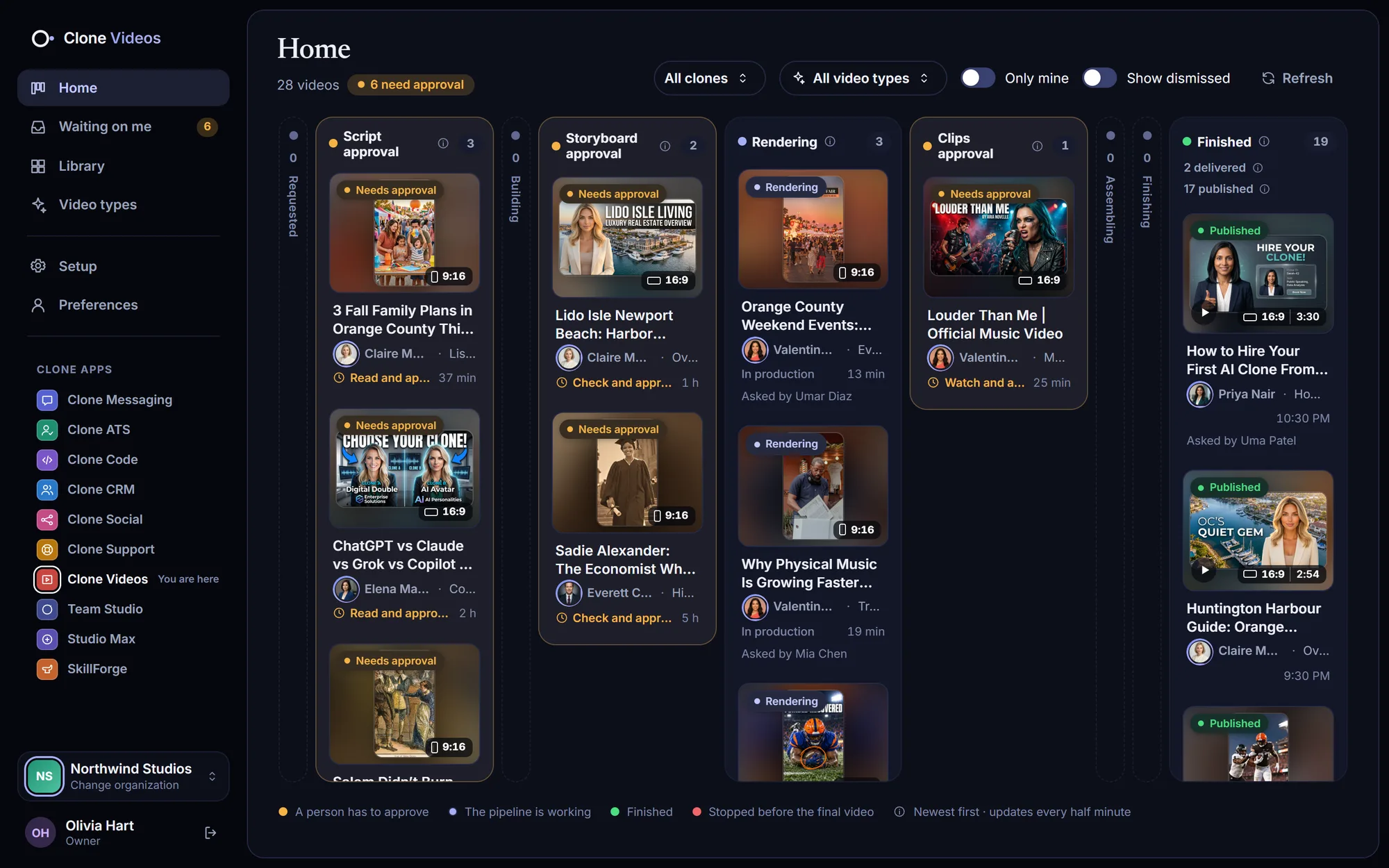
Your clones run your social and your video.
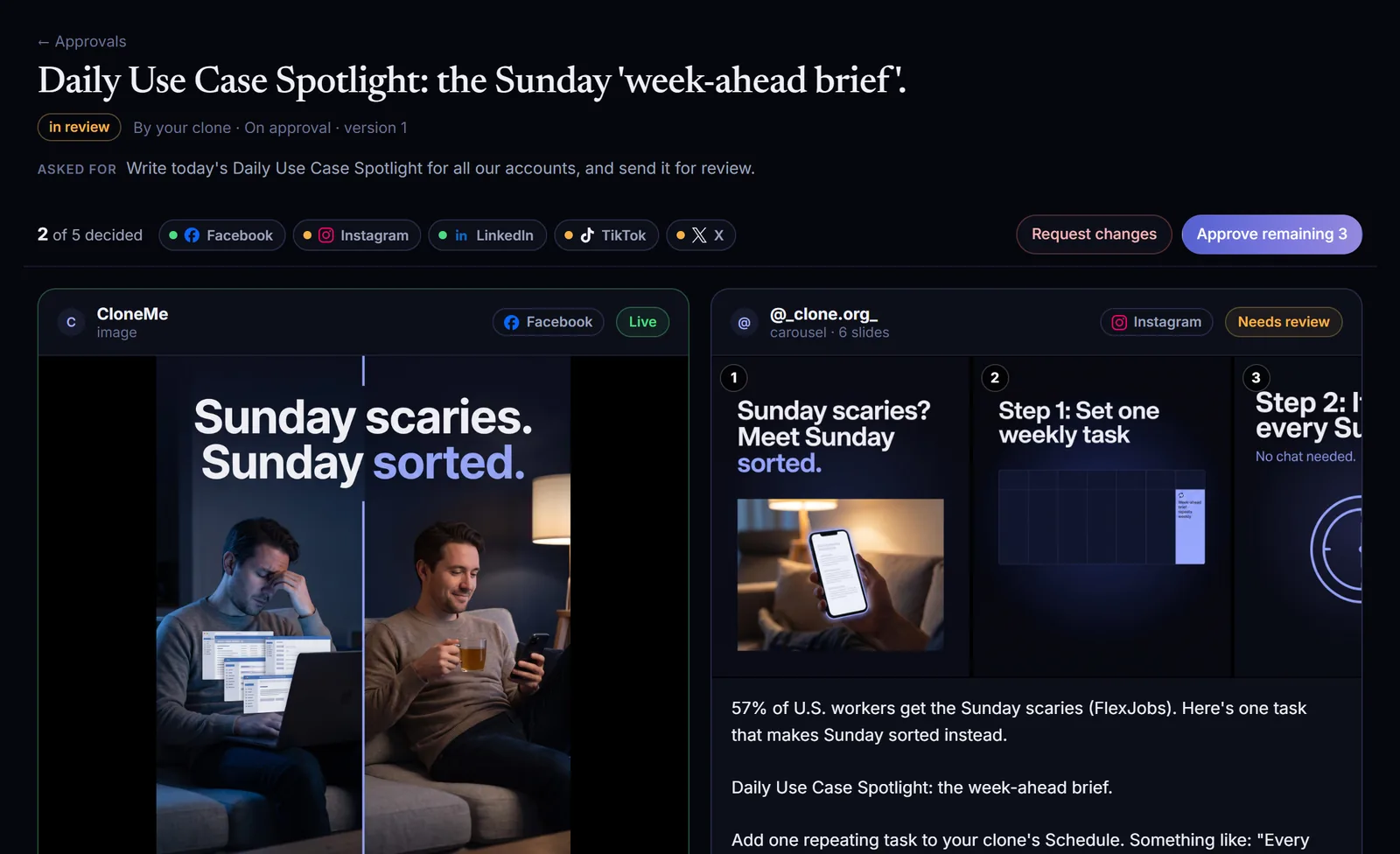
Clone Social drafts, schedules, publishes and replies on your own accounts. Clone Videos shows every video your clones make, from script to published. You approve. They do the rest.
Adopt Clone life. Day 1 to Day 365.
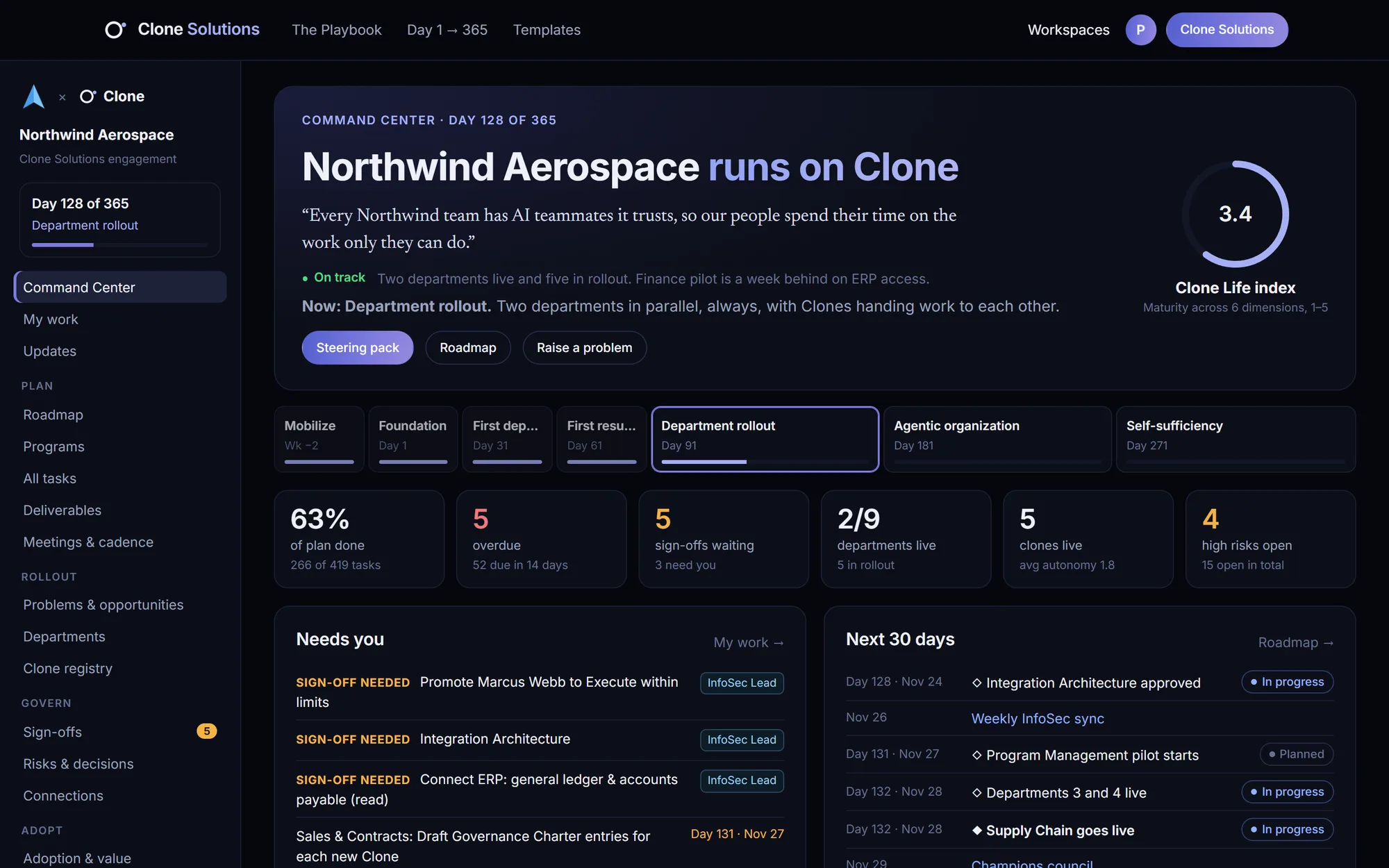
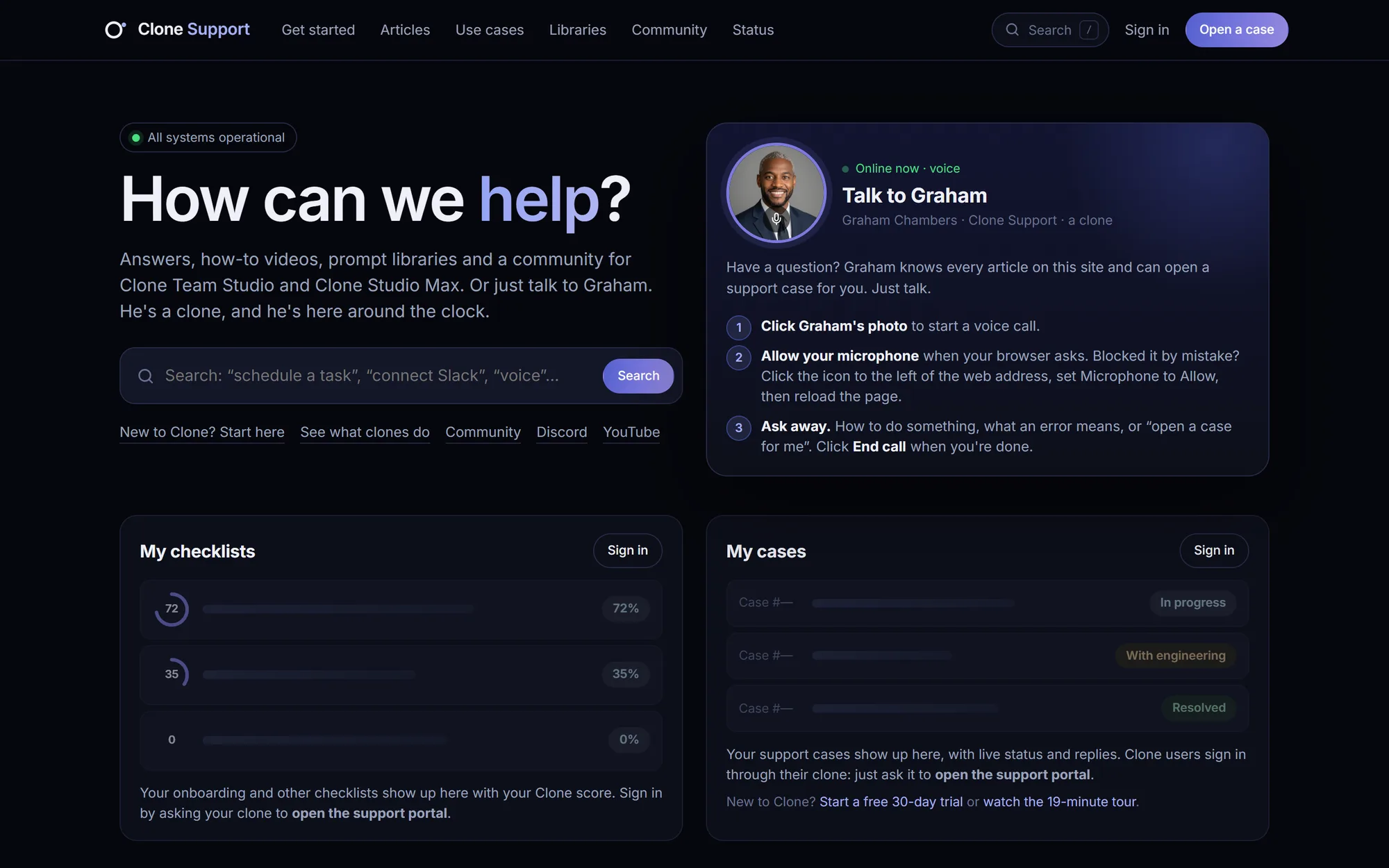
Clone Solutions is the workspace your rollout runs on: the roadmap, the programs, a registry of every clone, sign-offs and risks, with our team beside you. Clone Support is there every day in between, with answers, your cases and Graham, a support clone.
Where your clone team comes to work.
Hire role-ready clones from the Marketplace, give them knowledge and skills, and chat with them like teammates. Want the full workspace? Clone Studio Max opens with the same Clone account.
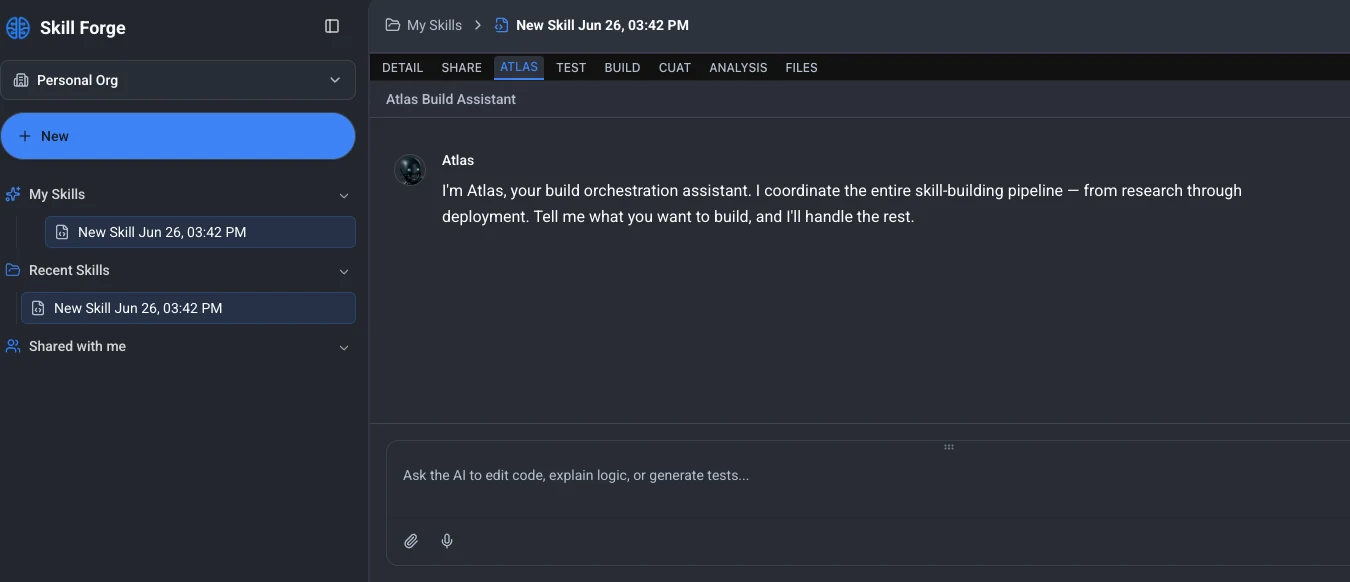
Describe the workflow. SkillForge builds the skill.
Tell Atlas what you want in plain English. SkillForge works out the design, builds the skill, tests it and publishes it, ready for any of your clones to run.
Every app your clone team runs on.
Your clones do the work in each app. Your people see it, approve it and stay in charge. To open one, just ask your clone.
Clones work where your team already works
Deploy them into the channels your organization runs on.
 Slack
 Microsoft Teams
 WhatsAppWeb chatVideo meetings
 Google Calendar
 Gmail
 Google DriveOOutlook
 Salesforce
 HubSpot
 ZapierWebhooks
 NotionDocs & Drive files
Hire for a role, not a prompt
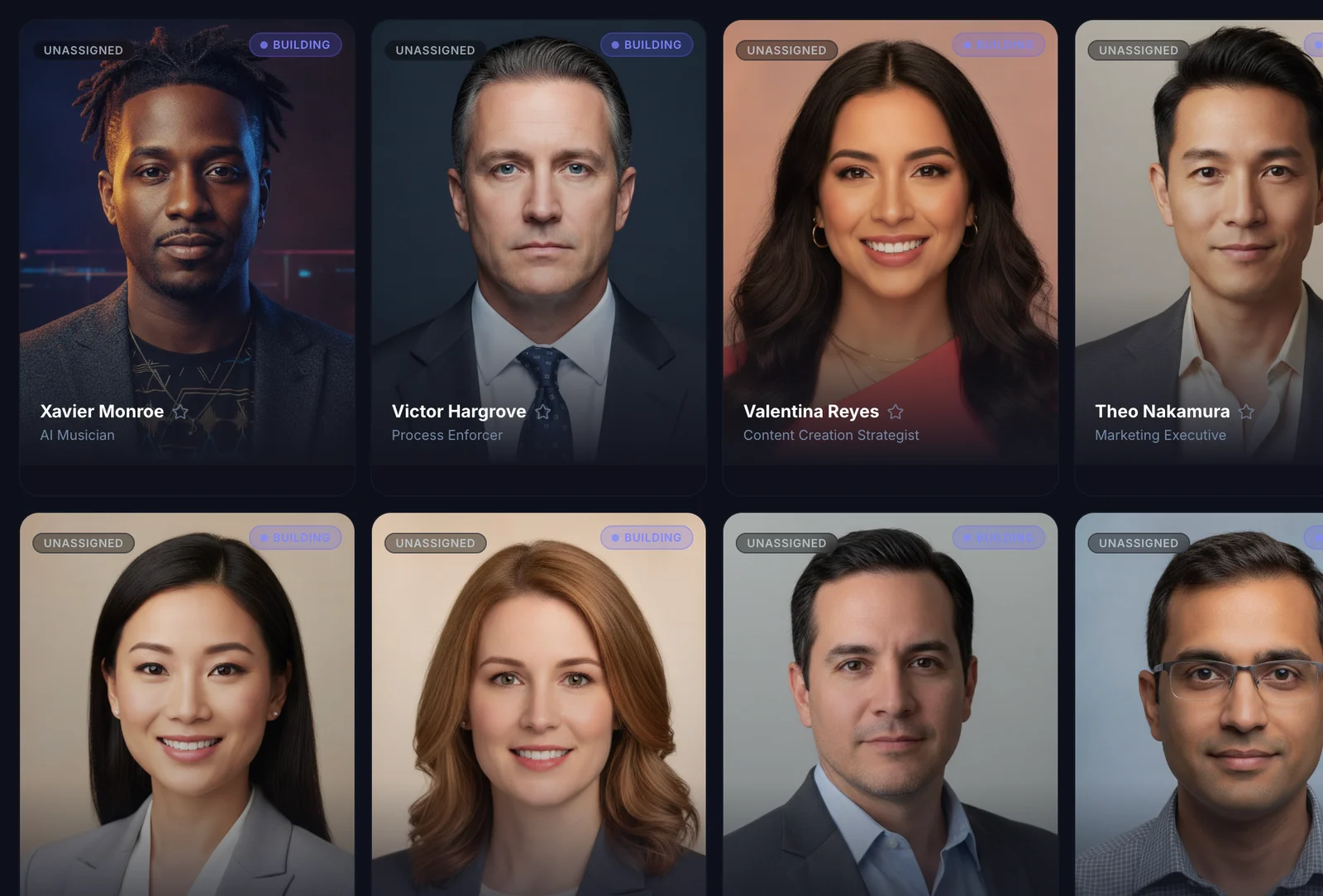
Every clone carries a job description: named areas of responsibility, the skills to own them, and the KPIs it answers for. Your Commander learns your goals and recommends the right hires from the marketplace — one click, and the new clone leads its own onboarding.


Your clone team, on the record
Every clone reports to a dashboard — who's working, who's blocked on you, and the value each one is creating. Every skill it runs lands in an execution log you can open from any chat.
From the people who hired them
We have hundreds of pages of contracts and specs per job. Now I just ask our clone what the payroll rules or the spec for a scope of work are, and I have the answer in seconds instead of digging through PDFs.
 Todd M.CFO, Precision Manufacturing
We invited the clone into our meeting expecting a gimmick. Fifteen minutes later everyone was just asking it questions. It had the answers point by point, faster than any of us.
 Bill J.Homebuilder
It's become part of how I work every day. Prep, follow-ups, research, first drafts. I hand it off, review it and move on. It's like adding a teammate who never drops the ball.
 Tom H.Product Development Executive
Skills that build themselves.
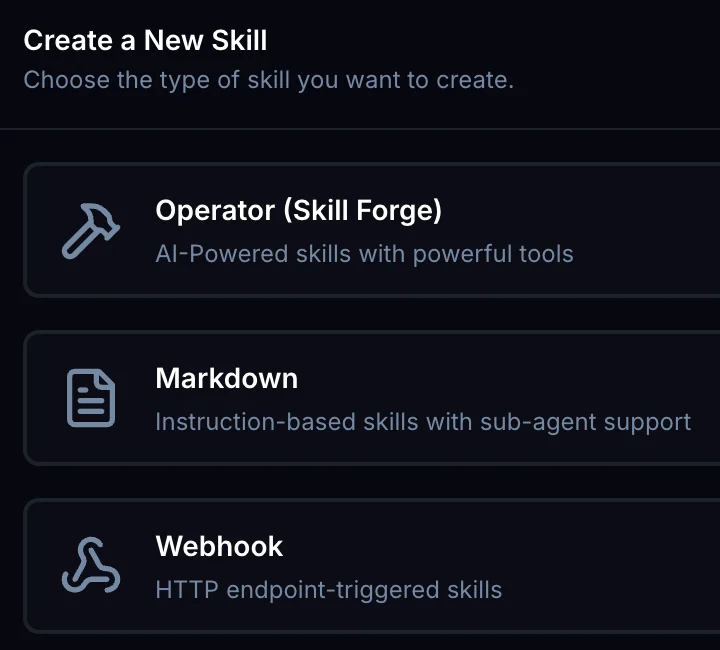
Describe the skill in plain language. SkillForge researches the API, architects the toolset, writes the code, trains the operator, deploys a real container, tests it the way your users will — and repairs itself until the tests stop teaching it anything. Built for developers; loved by anyone technical enough to watch the build narrate itself.
Purpose-built, not general-purpose
Yes, frontier models run under the hood — the difference is the factory around them. Eight specialist stages (research, architect, planner, author, reviewer, DevOps, tester, analyst), each in a fresh context, handing signed artifacts down the line.
It trains the operator, not just the code
Every skillset ships with a trained operator — a failure-hardened instruction layer that routes natural language to the right tool. The test harness drives the exact instructions that ship to production.
Tested against reality, then it repairs itself
Four layers: syntax, pytest, live HTTP against the deployed container, then an AI acting as your user — with real credentials, no mocks. Failures trigger bounded repair rounds: re-author, redeploy, re-test — stopping only when the loop proves there's nothing left to learn.
DevOps is a button
One click: image built, service deployed, verified, semver-tagged, registered to your org. Memory sized automatically. No YAML, no pipelines to babysit.
Your code, in your Git
A GitHub App opens a pull request in your repo for every version, authored as you — the Python, the operator instructions, and every stage's documentation. Your git history is the version archive.
Auth your code never touches
OAuth is vended by the platform at runtime; skills read named variables. Deploys are blocked if code reads a connection nobody declared.
From zero to a working team in minutes


Build your Clone organization
Stand up your org and hire clones into real roles — your Commander runs it with you.
Onboard them
Each clone learns your mission, your culture, and the skills its role demands.
Integrate everywhere
Wire them into your humans and your customers — phone, SMS, Teams, Slack, email, and more.
Evaluate performance
Power, engagement, KPIs — every action on the record. Expand what works.